COFFEE WITH
THOMAS DU PRÉ DE SAINT MAUR: “EVERY PERSON IS FREE, BUT NOT EVERY PERSON HAS THE GUTS TO BE WHO THEY WANT TO BE”
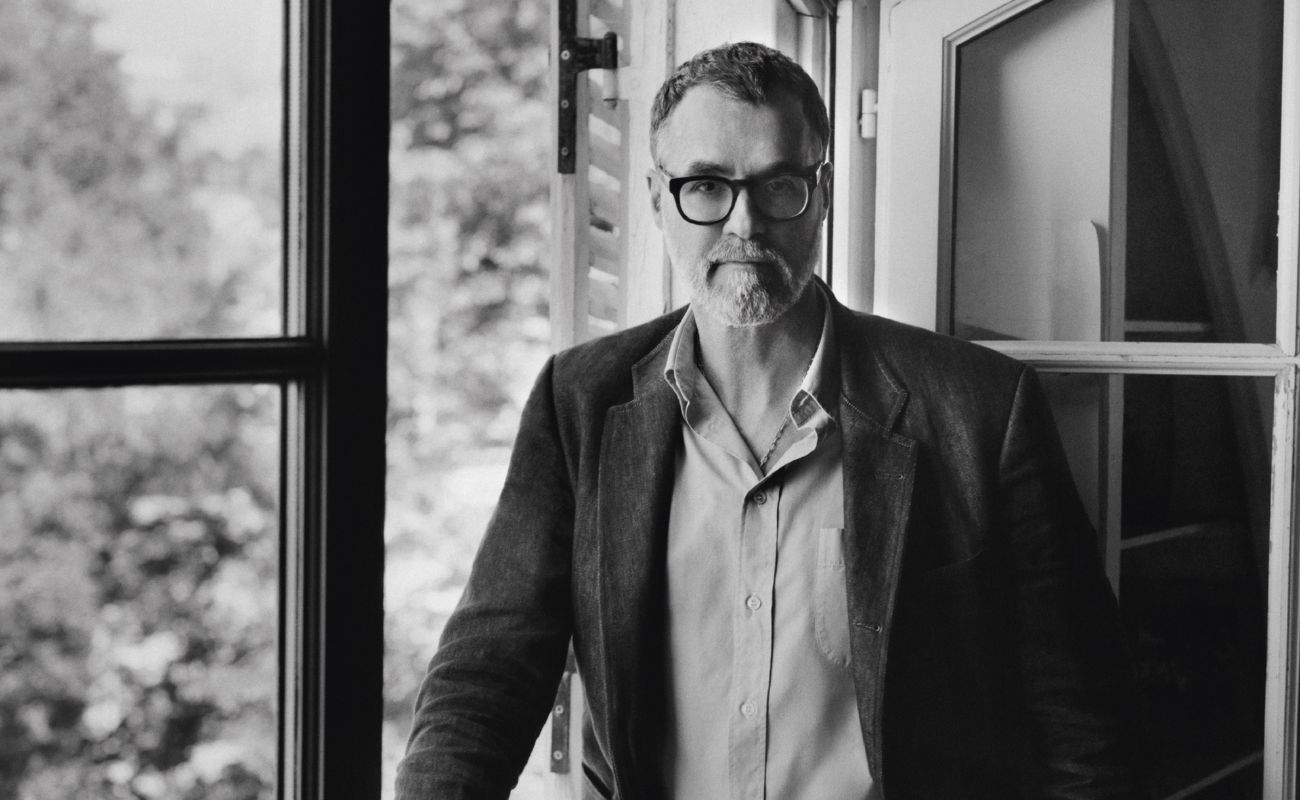
Name: Thomas du Pré de Saint Maur
Profession: Head of Global Creative Resources, Fragrance & Beauty, Chanel
Nationality: French-Venezuelan
LATINNESS: Let’s start at the beginning. We’ve read that your passion for beauty started when you were very young. What role did art and creativity play in your childhood, and how did these influences shape you?
THOMAS: I was very lucky to come from a family where art was important — not just art, but culture and humanist culture were very present. I had parents who really made sure we understood and were immersed in the world, and I cannot thank them enough for that. It was just like breathing, and even if we didn’t like it, they made us do it. I think what I take from that is a firm belief that beauty is more important to human beings than we realize. Humanism and plurality are absolutely key to any civilization, and I think I’ve held on to that, somehow.
LATINNESS: As Head of Global Creative Resources at Chanel, you oversee campaigns across beauty and fragrance, which include many creative worlds under one house. Where do you go for inspiration?
THOMAS: As a person, I would say I love literature, the performing arts, photography, and I love antiquity and antique art a lot. But more than that, I think it’s not so much about the “where” as the “how.” I find a lot of inspiration by simply trying to be very present in what I do, and especially in conversation with people. For me, inspiration comes from a discussion I have with friends, and suddenly, if you pay attention to what he says, or what you say, or what she says, there’s a great idea in that.
We live in a world where we don’t pay attention to anything anymore. I’m not going to say you can find inspiration from anything and anywhere, but pretty much, yes, no? Books, novels… What I like about novels versus anything else — especially if you work on the image side — is that, since there are no images, they force you to create the things you’re reading. There’s an empty space in a book that you have to fill up with things. I like the aspirational movement of a book.

LATINNESS: What are you currently reading, or is there a really good book you read recently that you want to mention?
THOMAS: I’m reading a very small book, which is very interesting. It’s a book by a French author, Dominique Vitoux, and it’s called “Carthage” — but the original one, the one from Africa. It’s about the fall of the Etruscan Empire, and it’s phenomenal. It’s very short, you can read it in two days, but it’s great because it’s really a reflection on the ephemeral nature of power.
The last one I read was also very good. It’s by Stefan Zweig, an incredible novelist and biographer. His biography of Magellan is a marvel because it shows you how crazy progress needs to be, and the madness of believing in impossible things that are necessary for the world to move forward. This guy, Magellan, was completely mad… a fantastic book.
LATINNESS: You’ve played a fundamental role in choosing the faces of Chanel. What qualities do you look for in an ambassador?
THOMAS: The first thing that matters to me is whether I really feel that I want to work with that person, because sometimes the market becomes too transactional. Today’s ambassador market is like the soccer market: one day someone’s here, the next day they’re there. The girl will shoot an ad for you in the morning, one for Puma in the afternoon, and one for Four Seasons the day after. So I really only work with people I have a very strong desire to work with because I respect them. The first thing for me is to ask myself, “Do I really feel that I want to work with these people?”
I need the work they do — whether it’s music or acting — to move me deeply. And that’s what happens, for example, with Gracie [Abrams], because more than any of the lyrics, what she writes is divine. It moves me and it stirs emotion in me. Gracie certainly isn’t at the very start of her career, but hers is a world where a career develops that way. I thought it would be interesting to do this portrait of Coco Mademoiselle with her, which is a very interesting moment in Coco’s life: that moment when she arrives in Paris, not super young, around twenty years old… and it seemed similar to Gracie’s moment, who is really at a pivotal point in her career.
Normally, to know whether someone is a good person, we have to see each other, have dinner together, go out for a few drinks, and from there, see if there’s something there… and Gracie wanted the same thing. She had told me, “No, let’s not talk, let’s just meet in person.” She came to Paris from London for lunch, and I saw her walk into the Bristol, observed how she behaved, and when she sat down at the table, I said, “OK, this is it. Here’s the contract — can you sign it?” These are very subjective things, but it’s never going to be about the number of followers on Instagram. Never, ever.
LATINNESS: Of course, and, well, Chanel is known for being visionary…
THOMAS: It’s not pretentious at all, but I know that, on our part, we’re going to bring the talent, the time, the team — all of this we’re going to put in. I know the result is going to be interesting and beautiful.
LATINNESS: Without that connection, it can be challenging to get the job done.
THOMAS: You need to handle it in a very relaxed way, but very seriously. My Venezuelan grandmother had this Dominican expression — or maybe Puerto Rican, it could be Puerto Rican — that I adore because she always used to tell me, “Amor, cógetelo con take it easy” (Darling, take it easy). I adore that expression; it really defines me a lot. You have to do it honestly. Life is already complicated, so please, don’t add anything complicated or pretentious to it.

LATINNESS: Beauty campaigns often shape cultural moments. When you’re creating or imagining, do you feel like you’re trying to reflect what’s happening in culture, or to define it?
THOMAS: Defining it seemed a bit pretentious to me. If I can at least reflect it, that’s already good. That said, it can happen — for example, with who we’re going to work with, what kind of music we’re going to use — that’s like reflecting the culture of the moment while also defining Chanel’s culture. What happens is that I always work thinking and hoping that my work is going to be good today. I don’t go into it thinking, “Look, I’m working for the next forty years…” In the end, I do have the responsibility of defining Chanel’s culture for ten, fifteen, twenty years, but I always start by asking myself: is it right for today? Always. That would be more about reflecting than defining. In the end, Chanel’s power transforms what I see as a reflection into a definition, I’d say. But look, doing good work every day is already complicated enough.
LATINNESS: Perfume seems like a particularly unique challenge to us because it’s invisible — you can’t smell it through a screen. How do you translate scent into an emotion, or into an image or narrative?
THOMAS: I never try to. I’m not going to try to represent the smell of a rose or jasmine, which is the most tacky and vulgar thing in the world. But, as you say, when I spray the fragrance, there’s an emotion, and it’s that emotion I want to put on screen. It’s about thinking of the emotion a woman feels when she puts on No. 5 or Coco Mademoiselle, or a man when he puts on Bleu. What happens? What form of energy, what form of emotion, what form of boldness do I want to communicate? I have something very deep inside me: that luxury isn’t just the product. That is the most vulgar thing in the world — saying that luxury comes down to the product. I’m certain that a woman who sprays on No. 5 is spraying on more of Marilyn Monroe than jasmine and rose. That emotion is what I want to communicate.

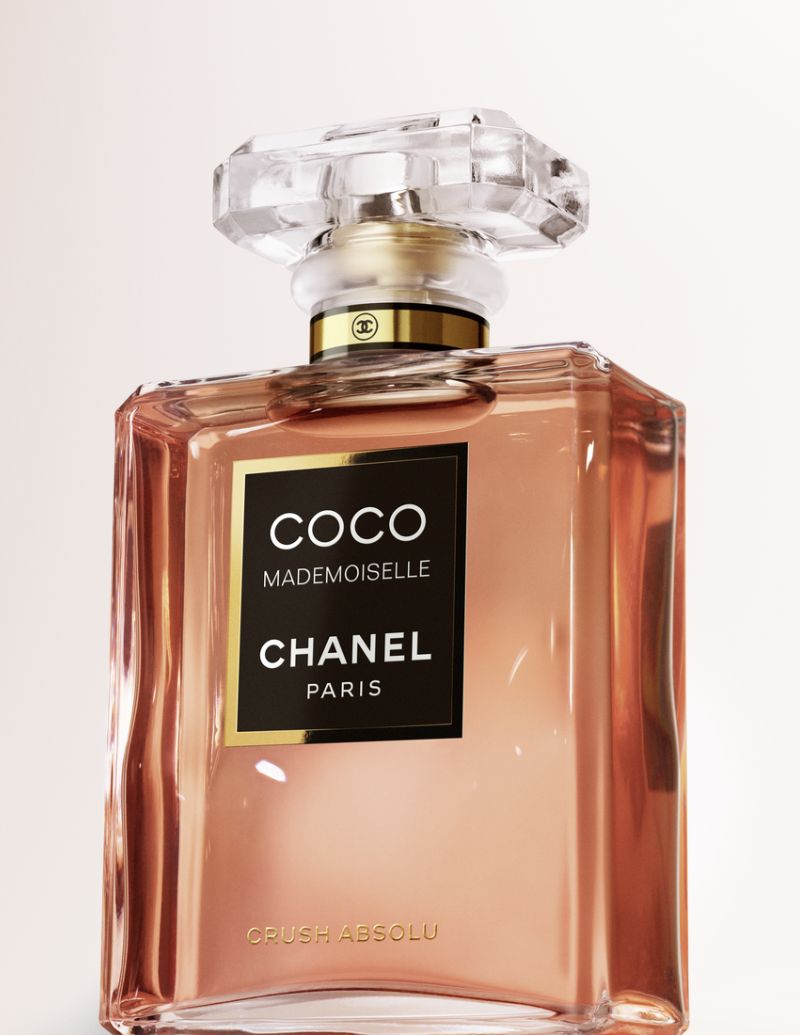
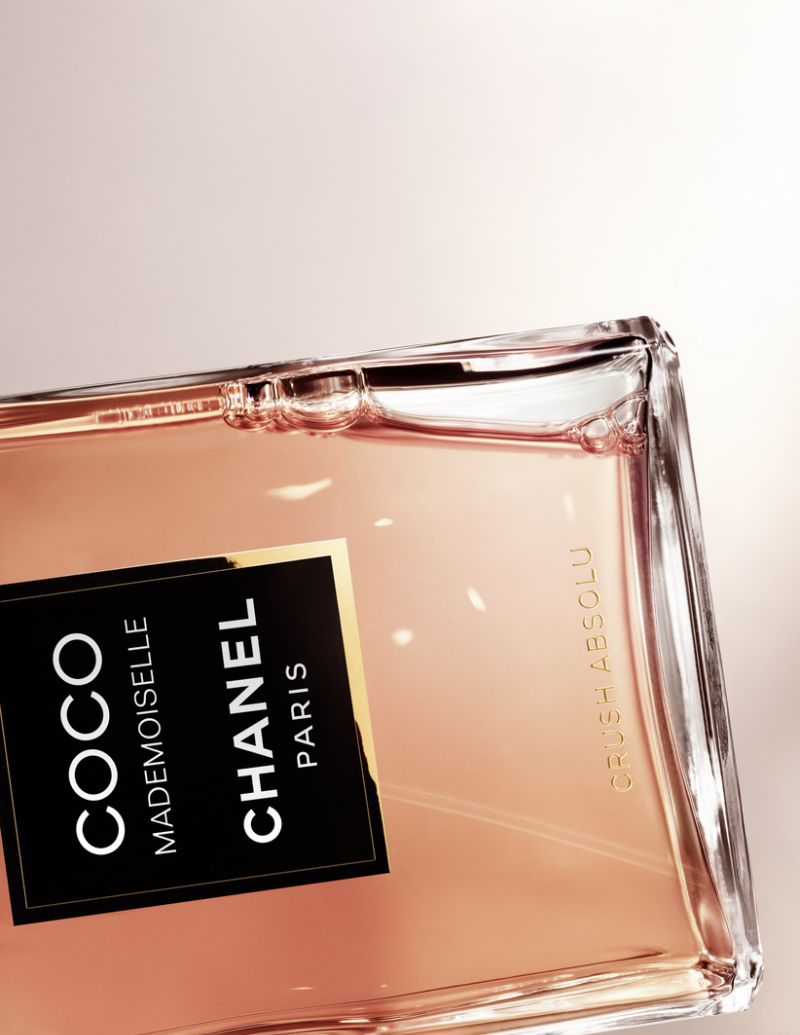
LATINNESS: That actually leads us to our next question. Speaking of Coco Mademoiselle Crush Absolu, what was that emotion, as you said, that you felt when you smelled it?
THOMAS: I was looking at Olivier [Polge], trying to see in his face what was happening. When there’s something you love very much, that you’ve created yourself, and that you put out into the world, there’s a moment — I don’t know what to call it — of fear… a terrible moment because you don’t know if the person you’re presenting it to is going to like it. And I was trying to detect the level of emotion. I could see that it was something very important to him, and then, once I smelled it, I suddenly liked it. There’s something very soft about it, there’s something very… Coco Mademoiselle, but very different. A little less “in your face,” I’d say. A little more… I don’t know if I’d call it sophisticated, but there’s something more complex about it. A slightly more complex personality, and I like that a lot. I believe the world tries to simplify everything in a terrible way, and what’s interesting is complexity. It’s not easy to handle, but what’s interesting about the world, what’s interesting about culture, is complexity, the many facets of things. I realized that this fragrance had that quality. It’s more complicated than selling a single-note rose fragrance… but a brand like Chanel needs that complexity.
LATINNESS: The fragrance speaks to the freedom of being whoever you want to be.
THOMAS: Not just freedom, darling, not just freedom. Freedom is something… it’s the decision. That’s what’s important about Chanel. Every person is free, but not every person has the guts to be who they want to be. And that’s Chanel. You choose. Don’t let the world choose for you. Never, ever.
LATINNESS: Very true. So, what does freedom mean to you as a creative?
THOMAS: Responsibility, more than anything. One doesn’t come without the other; they’re two sides of the same coin. Responsibility is very important because, going back to your question about following or defining culture, at Chanel we have a responsibility because people believe in us and follow Chanel, so we have to do things right. In today’s world, we have an important responsibility because the world today is heading in a direction that can be complicated.
LATINNESS: I have a former boss who loved to quote Spider-Man, who used to say, “With great power comes great responsibility.”
THOMAS: Of course, and that’s something you have to accept. I find it very interesting because, truly, without responsibility, I don’t know where things go.
LATINNESS: Absolutely. It’s a very powerful and important message. On our platform, we have a responsibility to celebrate Latin identity. As someone with Venezuelan roots, how has your Latin American identity influenced beauty and storytelling?
THOMAS: When I look at the women in my culture — for example, my mother, my grandmother, most of my Latin American friends — they’re all strong women. They’re women who aren’t afraid — not afraid physically, and not afraid culturally. And I love that.
I’m also a person who needs chaos, who needs noise… life is like that, disorganized. Life is what happens today, and that’s something I learned in Latin America.

LATINNESS: We also see the joy of living…
THOMAS: Of course, but I think it’s not just joy. It’s also the relationship these women have with life, because life in Latin America is complicated. I was greatly influenced by these women who have this joy because they know that life can change from one day to the next, and that if you don’t enjoy it, you’re wasting your life.
When I was younger, we used to spend time in Venezuela, in Choroní, in Los Roques… and then all of that disappeared, from one day to the next. It’s a joy full of wisdom, in a way. The other thing Latin America taught me is the relationship with nature and the power of nature. It’s something I always say: “Look, until you go to the Amazon, you don’t understand what nature really means.” The power of nature there is incredible.
LATINNESS: Or Canaima, or the Tepuyes you have in Venezuela…
THOMAS: The Tepuyes are fabulous. I haven’t been to the Tepuyes in fifteen years, but I adore — I adore that power. Also, if you go to Argentina and see the Paraná, that’s something very powerful too. What the region also taught me — and you also find this in Africa — is the strength of the continent. We don’t have that in Europe… when you see, for example, the intelligence of nature. There’s no better design than nature’s design. You can study all you want at Parsons School of Design, and then you go on safari in Africa, you see a giraffe, and the design is perfect. Or, for example, you get a PhD in circular economy at Stanford, but it’s better to go to the Amazon and see what nature’s circular economy really is — it’s so much better.
Yes, joy is something we have in Latin America in a very special way.
And, of course, dance. I’m not talking about reggaetón. Dance is such an important part of the culture, of what is the communion of bodies and minds when they dance together. Unique.