COFFEE WITH
LUIS CONTRERAS: “WHY HAVE MUSIC WHEN YOU ALREADY HAVE THE SOUND OF THE SEA AND THE BIRDS?”
Name: Luis Contreras
Profession: Hotelier, Sereno Hotels
Nationality: Venezuelan
Instagram: @ilsereno
Luis, you were born in Venezuela and grew up between different cultures from a young age. How has that influenced the way you see the world today?
It definitely has a lot to do with where I grew up. I was raised in Caracas, and I believe that in Latin America, and particularly there, there is a very special relationship with luxury: a combination of sophistication with a certain informality, together with a professional service that is deeply human and warm.
That is something our guests truly appreciate and, without a doubt, it comes from where I grew up.
What is your first memory of a hotel or the beach with your family?
I lived in Caracas, but I remember that we would go almost every weekend to the beaches along the coast, such as Playa Grande and Camurí. We would also travel to the East of Venezuela when we had longer weekends.
What was the first moment when you realized you wanted to create places, not just visit them?
I don’t know if there was one specific moment. This journey began in a somewhat unplanned way. My family was involved in the hotel business, and both my father and my mother are architects, so I grew up surrounded by a world of creating spaces, structures, and design.
But if you ask me whether, as a child, I imagined I would dedicate myself to hospitality, the answer is no. It was something that evolved through a series of circumstances and opportunities that came along the way.
An opportunity arose with the hotel in St. Barth. We discovered that there was a hotel for sale, and when I first saw it, I initially thought it could simply be a business: an operation that could be built, developed, and eventually moved on from.
But when we started looking at it more closely, we became completely invested. We immersed ourselves fully in the project, and more than 20 years later, I am still doing the same thing.
You lived in Saint-Barthélemy 20 years ago. A lot has changed since then, including the presence of social media. How do you manage to preserve the island’s bohemian spirit?
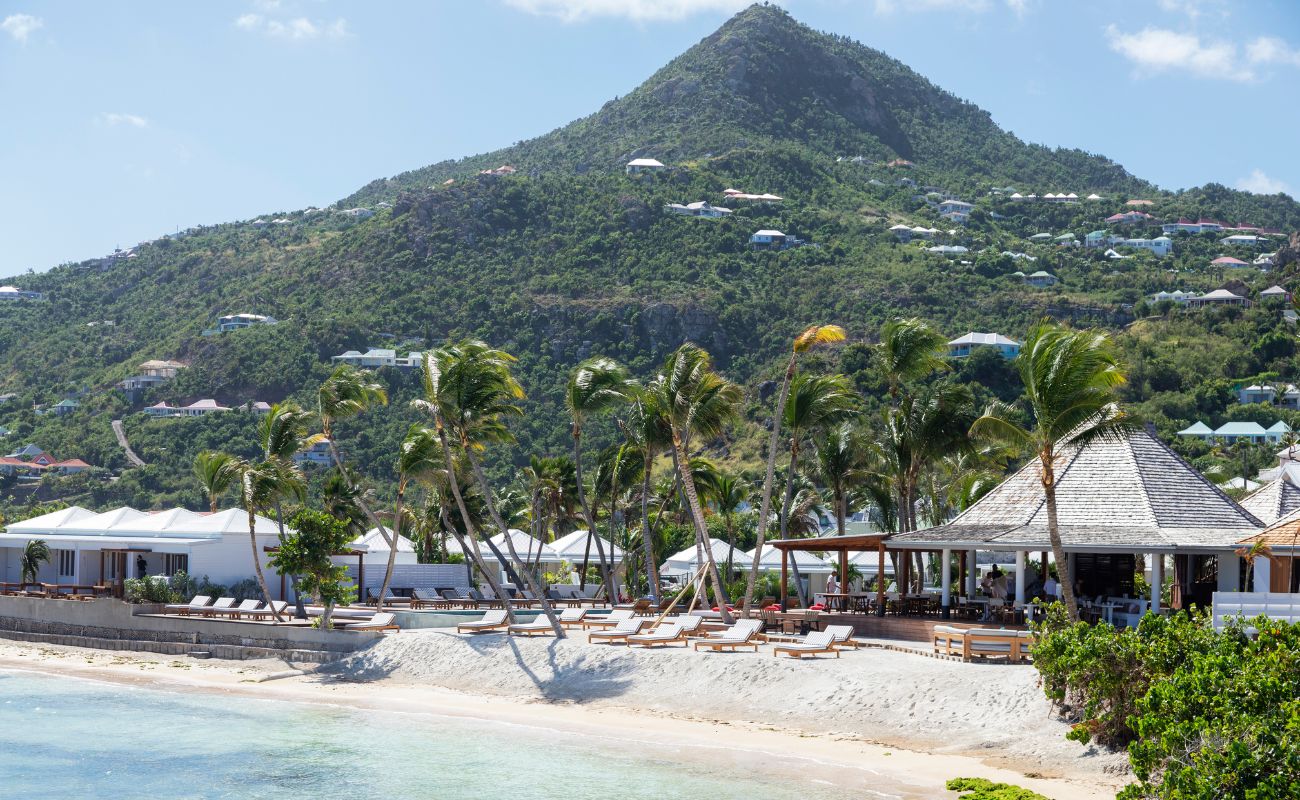
St. Barth has changed a little, but it has managed to maintain its authenticity because it is such a small island. I always say it feels like France 20 or 30 years ago.
The local community grew up accustomed to this environment and learned to respect the privacy of those who arrive. They are not impressed by names or status; to them, a person is simply a person.
I believe that attitude is exactly what gives St. Barth its laid-back spirit and makes it so special. It is changing a little — hopefully not too much — because we remain deeply committed to preserving that essence.
Photos courtesy of Sereno Hotels.
What does beauty mean to you today? Has your definition changed as you have built hotels?
For me, beauty is difficult to define, but I associate it with nature, peace, and well-being — with a feeling of calm.
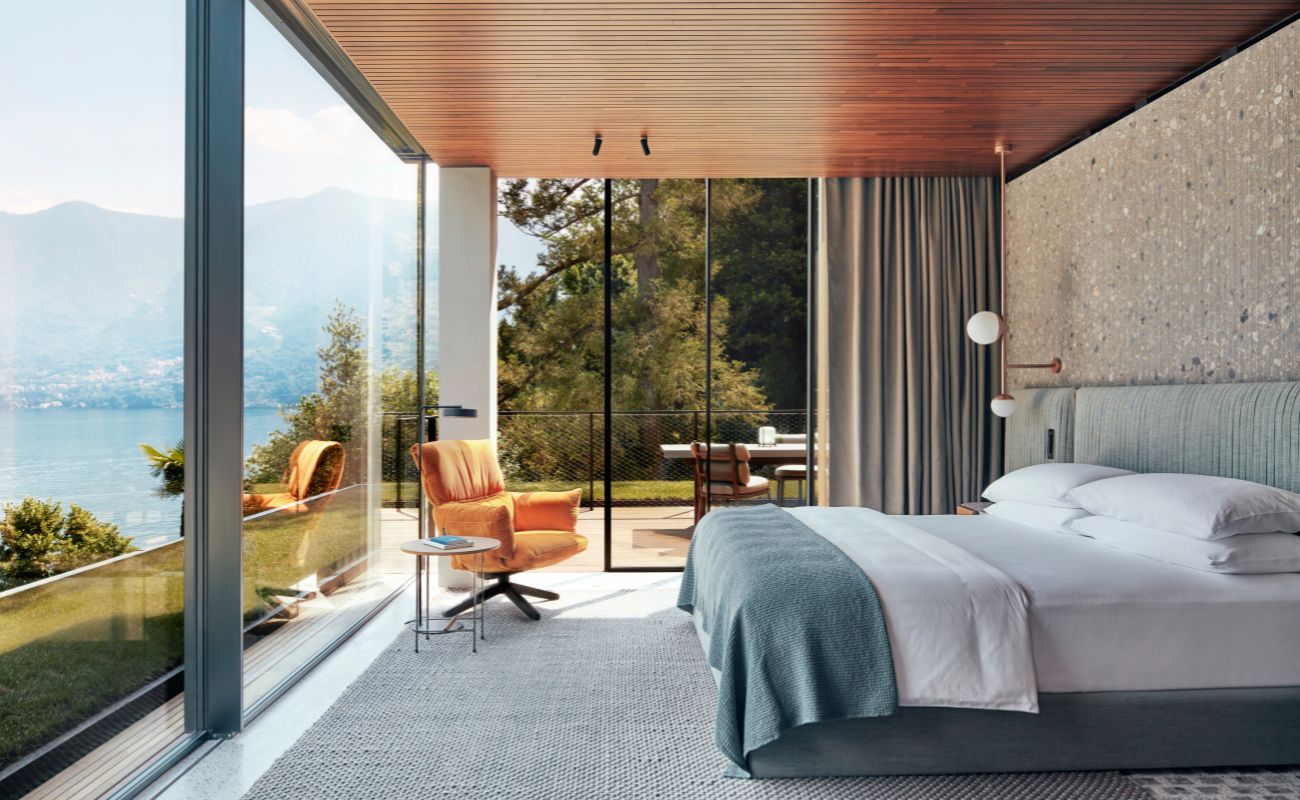
In hotels, it is about taking inspiration from the place itself, from nature, and from everything that surrounds you, and translating it into a human language of design. At the end of the day, a building exists to protect you from the sun, the rain, or the cold. From that essential function, the idea is to create, with the tools and creativity you have, a space that fulfills its purpose while also carrying a sense of beauty.
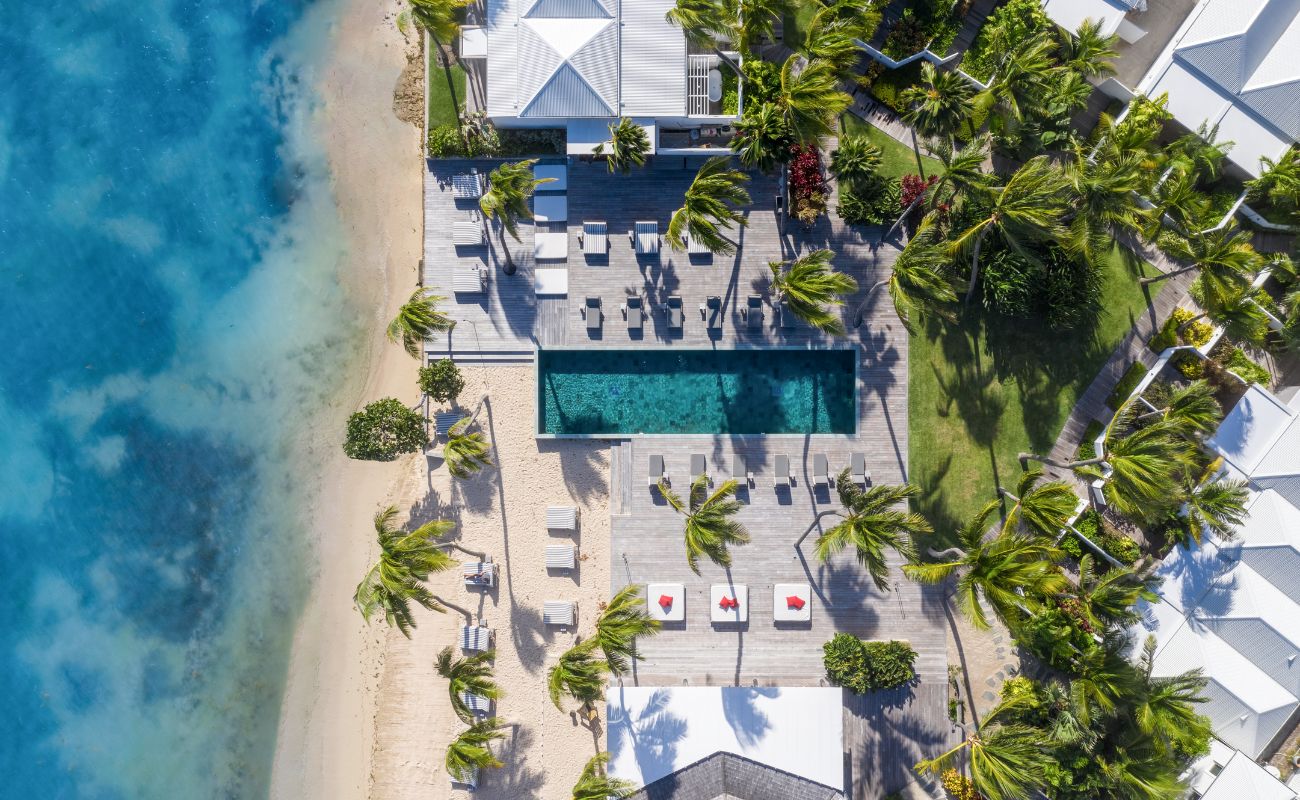
In St. Barth, for example, I believe it must be one of the few hotels in the world where umbrellas are not allowed. The typical image of an American resort with hundreds of umbrellas covering the beach, or the thatched palapas and all of that… there is nothing I like less.
To me, the idea of the beach is a very Venezuelan concept: the beach is the sea and the sand. It is not about adding decoration that becomes the main attraction and ultimately destroys the landscape.
In St. Barth, for example, we have a very strong South American clientele — Brazilian, Venezuelan, Mexican — probably more than many other hotels. And I believe that, in part, this comes from that shared understanding. Although guests may not necessarily be conscious of it, the origin of that connection comes from this particular way of seeing and experiencing the landscape.
For example, we do not have music in our restaurant. In St. Barth, wherever you go, music is usually playing at full volume. Here, it is different.
Why have music when you already have the sound of the sea and the birds?
That is the concept we have created. Every operator who visits asks me: “Why do you do this?” And I answer: “You are the crazy ones, not me,” because guests truly appreciate it.
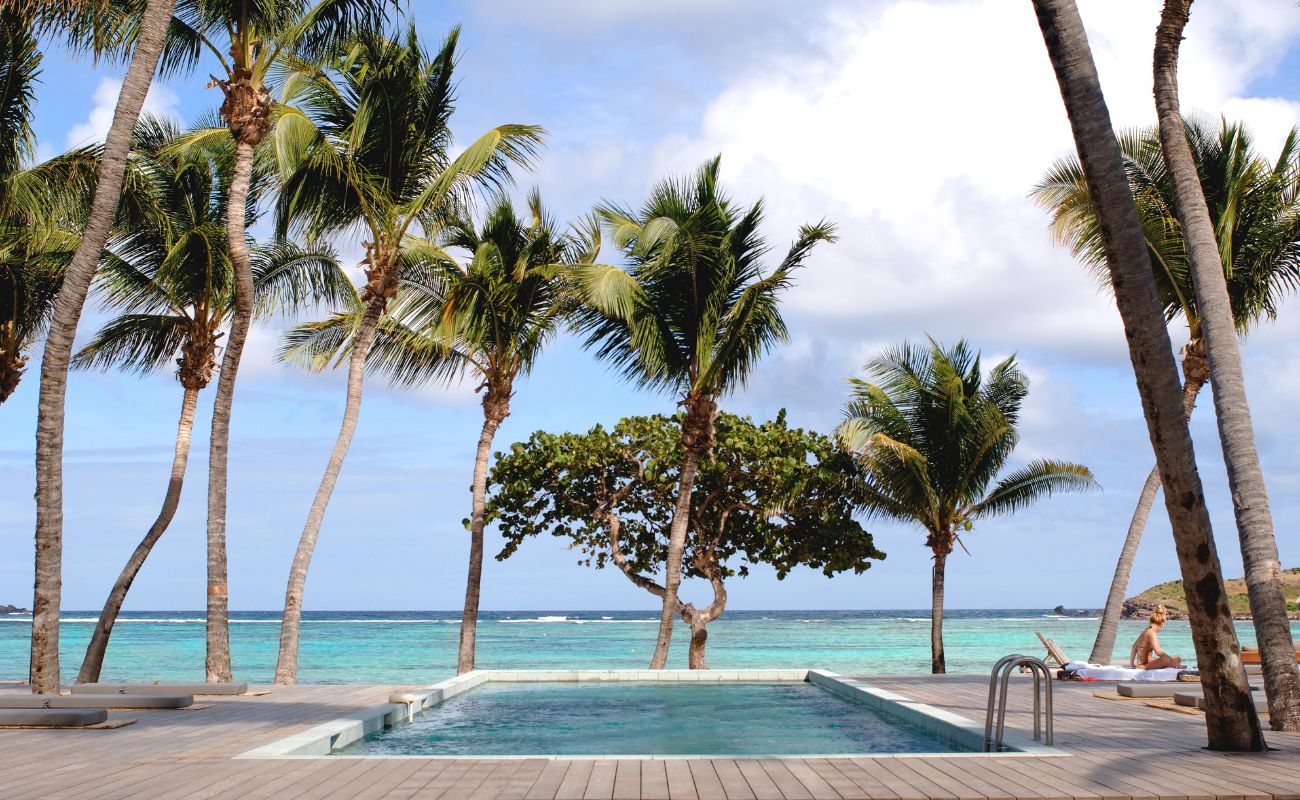
You have properties in two of the world’s most coveted destinations, St. Barth and Lake Como. What are the ingredients that make a destination feel right for you?
The emotional aspect is incredibly important because what we do requires enormous investments of time, money, and ultimately, life.
Of course, there has to be an expectation of financial return, but there also needs to be an emotional return: the feeling that you truly want to dedicate your life to that project.
First, you look at a place rationally and think that you can create a successful business. But at the same time, you ask yourself: “Do my family and I want to spend the next ten years here?”
When those two things come together, as they did in Como, then we move forward.
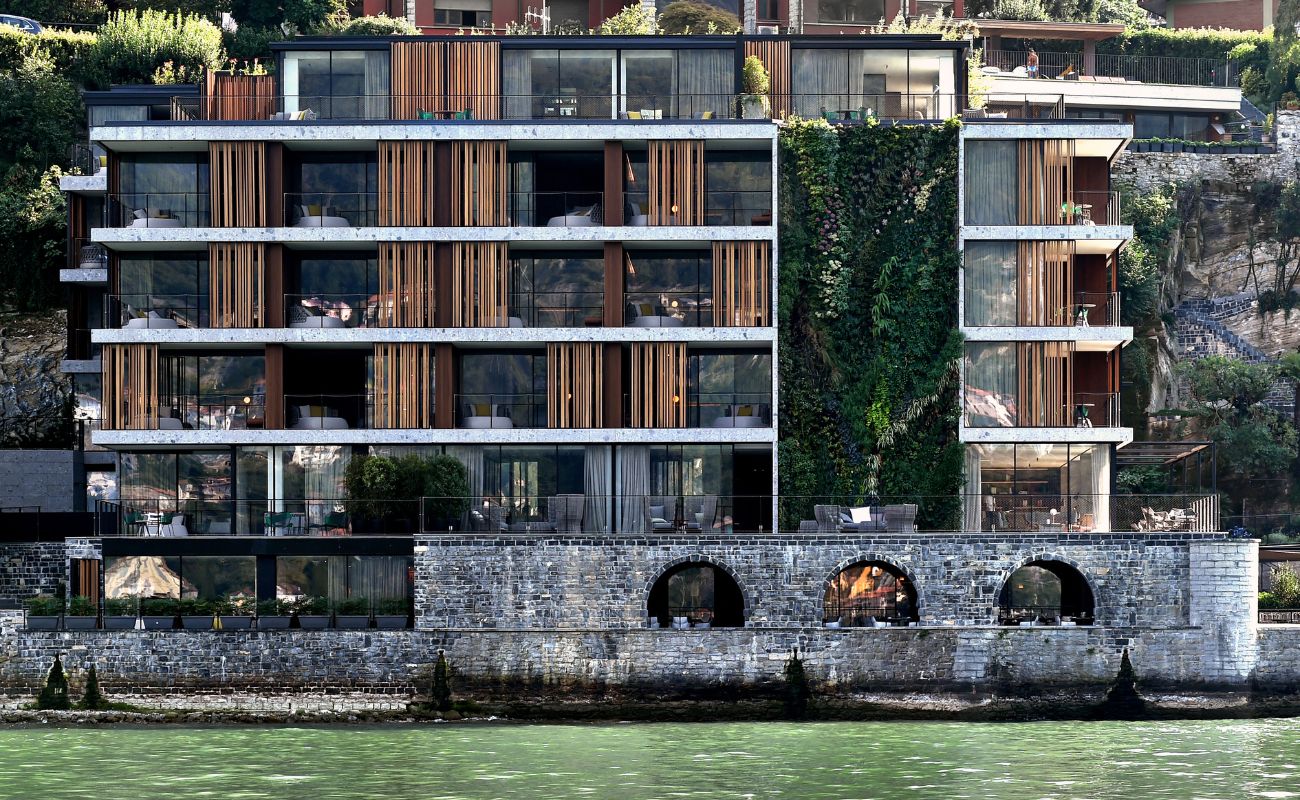
And here in Como, was there nothing before?
Historically, there was a restaurant here. When we arrived, it had been abandoned for a long time.
It was the typical restaurant of the past: one person worked in the kitchen and the other managed the dining room. They were partners, each owning half of the business.
At the time, it was a very simple restaurant, but it was successful because the location itself is extraordinary. When one of the two partners passed away of old age, they put it up for sale.
The restaurant remained abandoned for a while, until we arrived.
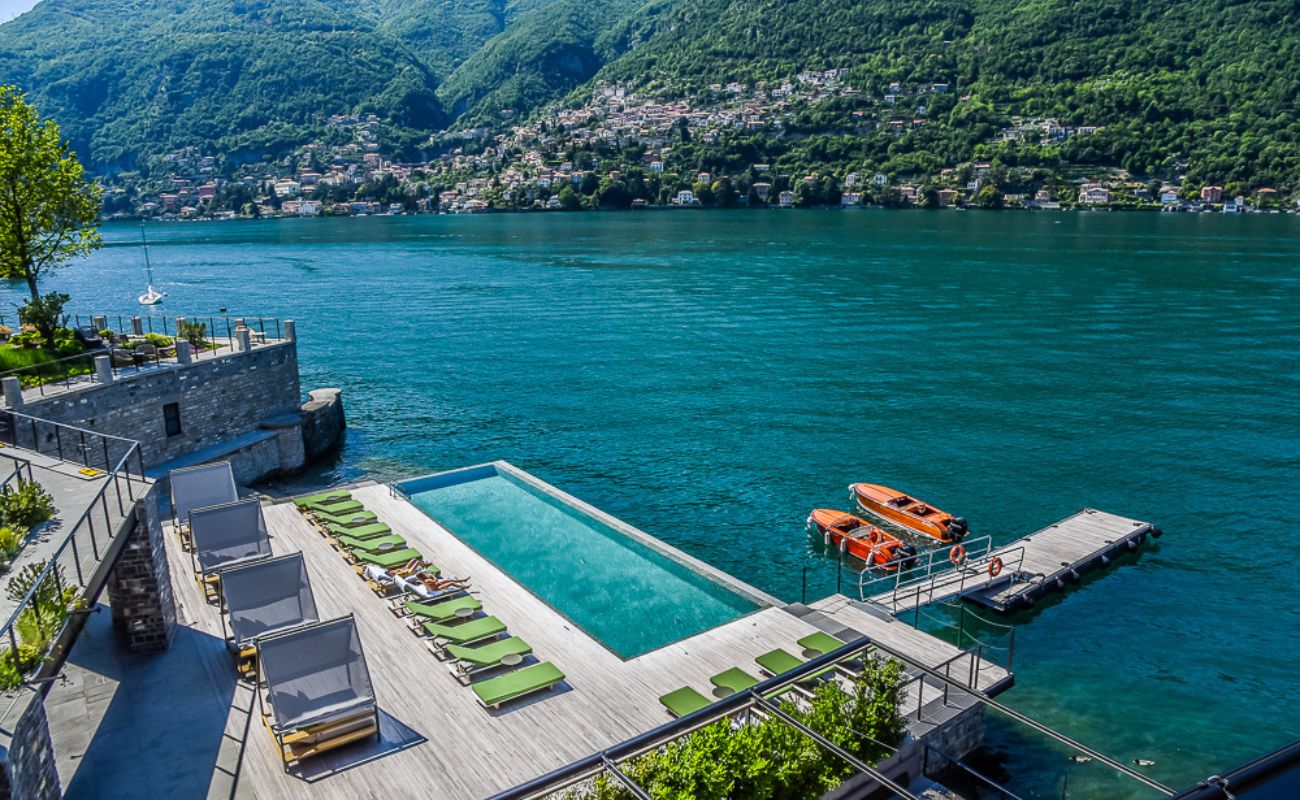
The hotel features a modern design by Patricia Urquiola. What was the process like working in Italy with Belle Arti?
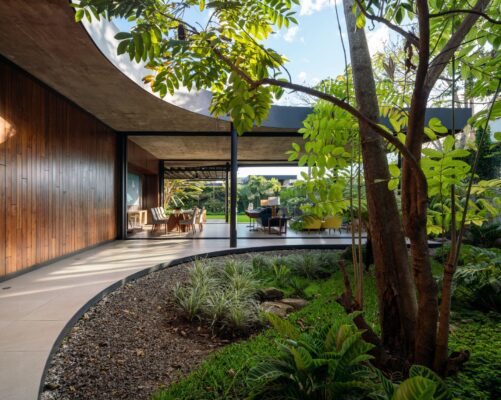
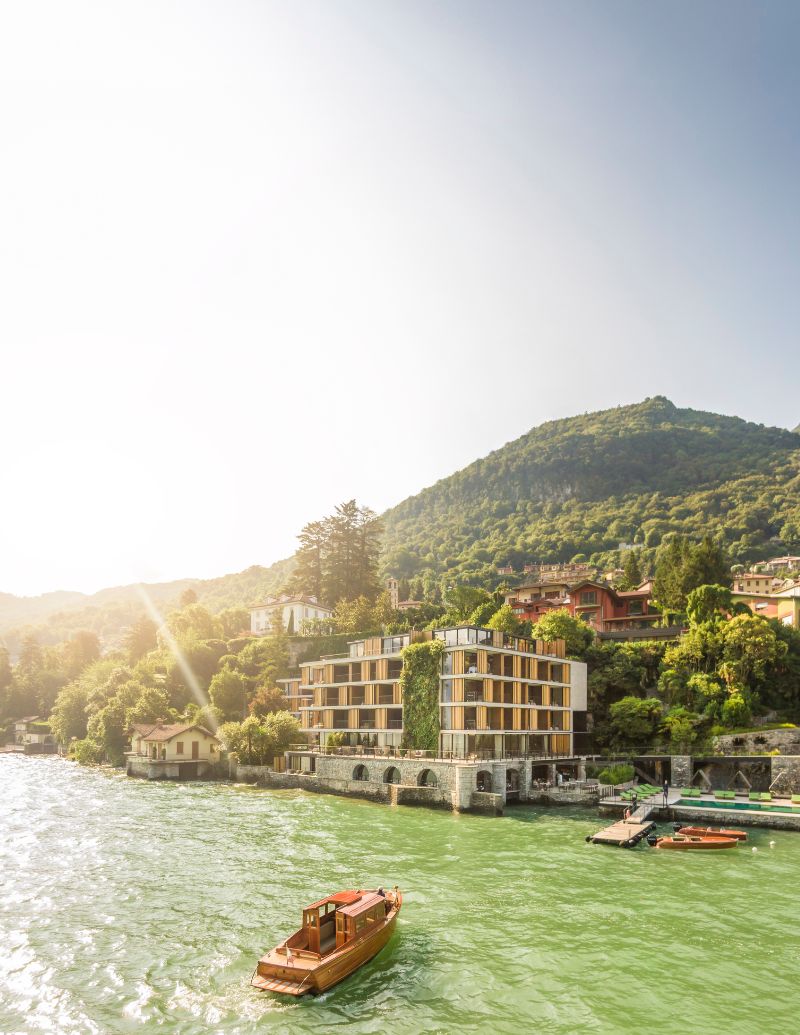
It was a 17th-century villa. In Lake Como, the landscape is protected. That means that even if you are creating a modern house, that house is protected by definition. Here in Lake Como, everything is protected, and every project has to go through the Belle Arti approval process.
Yes, it is a complex process that takes a long time. At the same time, I have to say that, overall, our experience was fair and reasonable.
Because, fortunately, they protect it — and that is exactly why everything here is so beautiful.
You are absolutely right.
And, on the other hand, the dialogue with the authorities was always a high-level conversation. They were architects and, in general, people who understood what we were trying to achieve.
Of course, at the beginning, they told us we were crazy and that they would not allow us to do anything. But as we explained what we wanted to create and, most importantly, why, the conversation changed.
In the end, this building is inspired by one of the most important buildings in Como, designed by one of the city’s most renowned architects, Terragni: the Palazzo Terragni.
Everything here is anchored in history, but we are living in the 21st century, and this is a 21st-century building, created by 21st-century designers.
From a permitting perspective, and especially from the clients’ perspective, it was a risky decision. But honestly, as soon as we opened, we realized we had made the right choice.
There was no rejection whatsoever. Of course, we created something beautiful, but people were more than ready to embrace and experience what we had created.
Your hotels have around 39 to 40 keys. Is there a limit to the scale you want to reach?
Yes, definitely. There is a service decision and a business decision behind it. I believe the service aspect is the most important one.
At Sereno, we do not have managers in the traditional sense. At Sereno, everyone is in direct contact with the guest.
In large hotel chains, the standards manuals are enormous, and much of the training is about teaching people a book of procedures, rather than teaching them how to smile and how to make guests genuinely happy.
In a large hotel — and large does not necessarily mean a thousand rooms; it can be a hotel with one hundred rooms — managers often never see a guest. They are sitting in an office, having meetings with their teams and looking at things on a computer.
Here, we do not have offices. Everyone is interacting with guests. The general manager is at the front desk, and the director of food and beverage is on the restaurant floor.
Of course, they have a small, uncomfortable desk where they answer emails from time to time, but they are constantly moving around the hotel. They are leaders, they have teams, and they have staff meetings, but ultimately, their job is to be with the guests.
And I believe that once you go much beyond 40 rooms, it becomes impossible to maintain this model. At a certain point, the scale requires more layers of people. You start having managers managing other managers, who manage other managers, and eventually the person on the floor — the one who actually interacts with the guest — becomes invisible. No one knows their name or what they do.
I believe this is what allows us to create the level of service that truly differentiates us from our competitors. Being small gives us the ability to do things that others probably cannot.
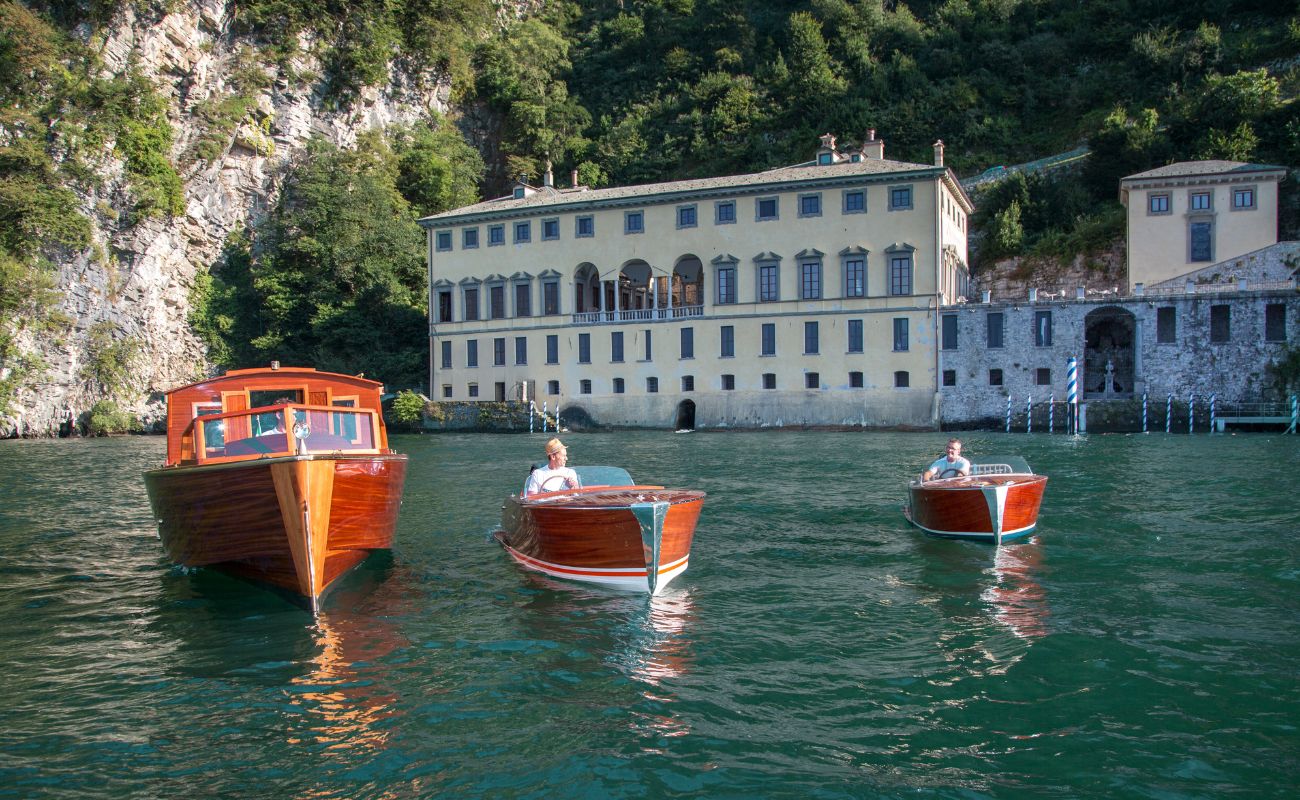
As soon as I arrived at Sereno, I have to admit I felt like I had arrived home. I also loved that you have so many local people working here. For example, yesterday, while we were on the boat, my husband asked one of the team members, “Where should we go?” And he said, “You know, I used to jump from a Roman bridge in Nesso when I was a child. It is safe, you can go there.” We went there, and it was one of the most beautiful experiences.
It is very special. Yes, the human aspect is the best part of this work.
This year, as we celebrate the hotel’s ten-year anniversary, almost all of our managers have been with us for at least eight years. We have extremely low staff turnover and, you know, people stay because they genuinely enjoy being here.
Of course, there is an economic aspect, but it is not only about that. People stay because they like working here, because there is a good working environment, because they build friendships and create personal relationships.
And that is also what makes the service so good, because when you are happy, everything becomes much easier. At the end of the day, things can get complicated, but a big part of this work is being positive, smiling, and being open and present for the guest.
And when you are in a good mood, all of that becomes much easier.
In a world where travel is increasingly guided by algorithms and the need to document everything, there is sometimes even anxiety around not sharing the experience — almost as if, if it is not posted, it never happened. How do we return to traveling simply for the pleasure of traveling, without being so concerned about sharing it?
I think it is a very well-posed question. And I believe the answer is already within the question: by avoiding exactly what you are describing, and simply allowing yourself to enjoy the experience with your inner self and with the people you are sharing it with.
Of course, taking photos is fun, and sharing moments with friends is also enjoyable, but that should not be the purpose of the journey.
The purpose of travel is to experience and enjoy the journey itself, without a doubt.
Beyond your own properties, which hotels have left an emotional mark on you?
To me, hospitality is, once again, about creating objects, structures, and spaces that are beautiful, expensive, and incredibly complex to build. But what truly creates the experience is the service, more than the structure itself.
The structure has to be there, of course, but it is the service that makes the difference.
Secondly, even though the world changes, as the French say: “Plus ça change, plus c’est la même chose.” The essence of service does not change. And I believe that the standards of hospitality we follow today are the same ones that, if César Ritz were to come back to life and visit us, I hope he would feel we are still honoring.
The hotels I have always been drawn to are the more traditional ones. For example, although they have evolved — and my memories from years ago may not be as precise as more recent experiences — I have always loved the great hotels of London, such as Claridge’s.
The experience they create when you arrive, when you are escorted to your room… The rooms they had in the past, that old-world feeling in the design, combined with a very formal yet deeply knowledgeable service, is something I truly appreciate.
I also love the Grand Resort Zürserhof in Zürs, Austria, and some of the equivalent hotels in France. I remember, for example, Hôtel Saint James in Paris.
These are hotels where many members of the staff have been there their entire lives. Those are the kinds of experiences that have truly stayed with me.
If you could build a hotel in Latin America today, where would it be and why?
I have always loved the south of Brazil. Creating something in Florianópolis, or somewhere similar, would be very exciting.
I also think doing something in Punta del Este would be incredibly beautiful.
And, if one day it were possible, creating something in Venezuela would be very special as well.
What are guests really looking for today, even if they do not know how to express it?
Yes, I think the second part of the question is very important. In general, I believe guests do not always know how to express it.
Or, put differently, our role is to create moments of surprise: so that they may not even know exactly why, but they arrive somewhere, breathe a different air, and simply feel good. At the end of the day, that is the main objective.
It comes through the design, through the service, and through so many details that we create.
For example, here, the design of the entrance. We intentionally created the arrival experience so that guests cannot see the lake right away.
You arrive, it is beautiful, surrounded by plants and greenery, but when you step out of the car, four people welcome you from both sides of the vehicle. You walk through an entrance passage and, suddenly, the view of the lake opens up in front of you.
On top of that, all the plants at the entrance have their own aromas: depending on the season, you might smell flowers, orange blossoms, and different scents from nature.
And all of these details are things you may not even consciously notice, but they are there. The moment you step out of the car, you receive the service, the welcome, and that visual impact of thinking: “Wow, this is beautiful.” You do not even realize the role the scent is playing, but it is already making you feel good.
Then you arrive in the room, and the more technical side of hospitality begins. But normally, guests arrive after a long journey, tired and sometimes frustrated. Travel keeps getting more complicated; perhaps their luggage did not arrive, and they are already stressed.
So we try to make the check-in process as quick and seamless as possible, so that suddenly they think: “I am on vacation now.”
All of these small details make you arrive somewhere and, without even realizing it, think: “I feel so good here. I am happy.”
That is, in many ways, what we are trying to create.